

Can a brand’s narrative really make customers loyal and set it apart in a busy market?
We think making a special branding strategy is key today. By mixing your brand’s history, values, and mission into a story, you connect deeply with people. Good narrative marketing makes a brand relatable, sharing its values and goals in a way that speaks to people.
Using social media helps spread your brand’s story, building a strong bond with your audience.
Key Takeaways
- Crafting a unique brand narrative is key for standing out.
- A good brand story builds customer loyalty.
- Effective narrative marketing makes a brand more relatable.
- Social media boosts a brand’s story.
- A strong brand narrative leads to lasting success.
The Power of Brand Storytelling in Today’s Digital Landscape
In today’s world, brand storytelling is a key tool for businesses. It helps them connect with people on a deeper level. With so much information around, a good story can make a brand stand out and build strong relationships.
Why Narratives Outperform Traditional Marketing
Traditional marketing often feels impersonal and focused on sales. But brand storytelling makes a company seem more human. It shares its values, mission, and vision in a way that people can relate to.
By using content storytelling, businesses can build emotional bonds with their audience. This leads to more engagement and loyalty.
The Neuroscience Behind Story-Driven Consumer Decisions
Studies in neuroscience show that stories deeply affect how we make choices. A good story can make our brains release dopamine, creating a positive feeling towards the brand. By using storytelling techniques, companies can influence our choices and build loyalty.
For more tips on boosting your brand, check out our guide on mastering social media.
Discovering Your Brand’s Authentic Story Foundation
To make a compelling brand story, you need to find what truly drives your brand. This means understanding your brand’s identity and values. It’s a key step in creating a story that stands out.
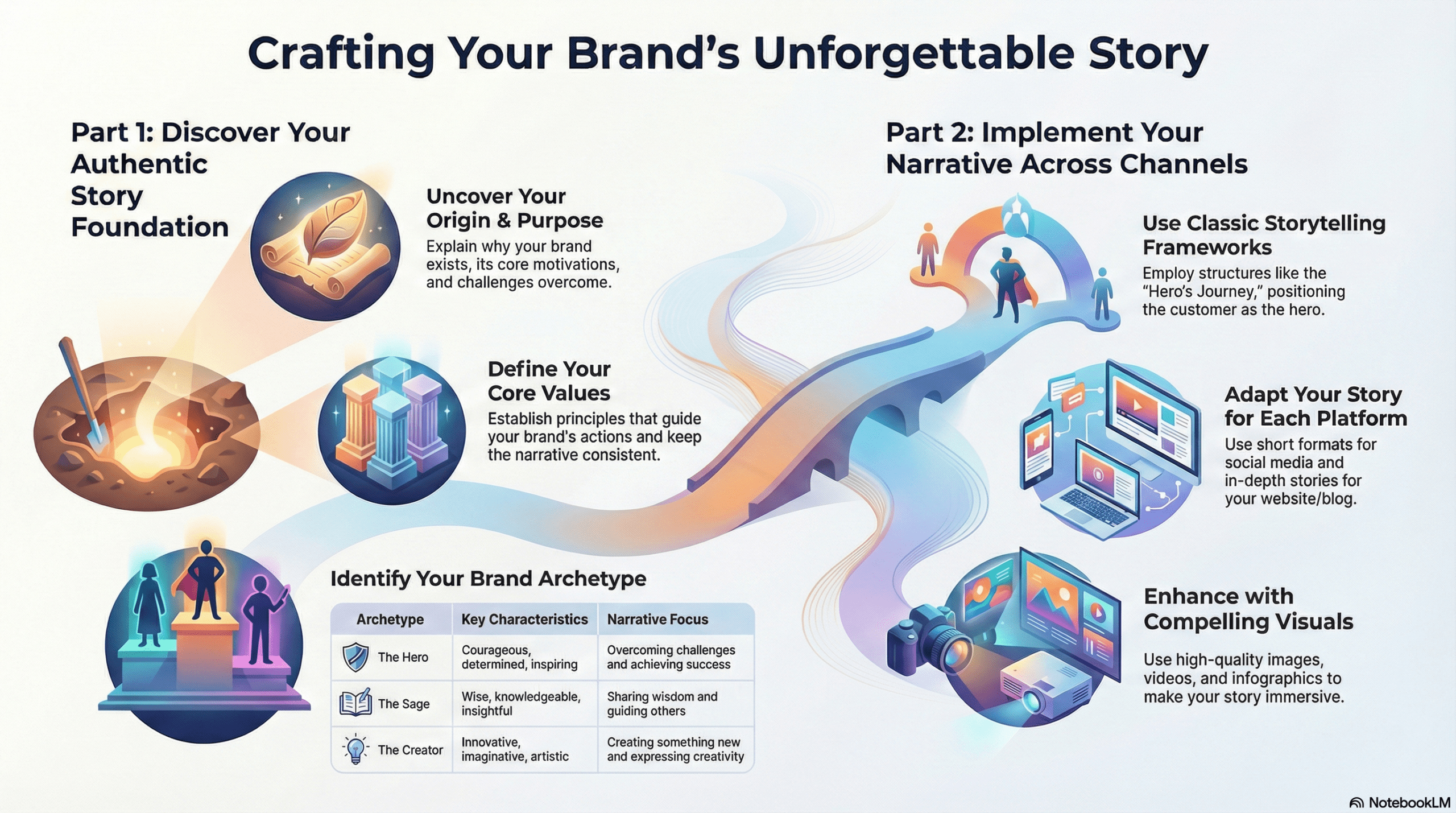
Uncovering Your Origin Story and Purpose
Your brand’s origin story is the base of your narrative. It explains why your brand exists and what motivates it. Brand storytelling experts say this story should highlight your brand’s purpose. It should show the challenges you’ve faced and the values you hold dear.
Defining Core Values That Drive Your Narrative
Core values guide your brand’s actions and decisions. They are key to creating a story that connects with your audience. By setting these values, your brand story stays true and consistent everywhere. For example, if you value sustainability, your story should show this commitment.

Identifying Your Brand’s Character Archetype
Brand archetypes define your brand’s personality and tone. They are patterns that people find relatable. Common archetypes include the Hero, Sage, and Creator.
The Hero, Sage, Creator and Other Brand Personalities
Knowing your brand archetype is vital for a story that speaks to your audience. For instance, if you’re a Hero, your story might be about overcoming obstacles. A Sage might focus on sharing wisdom.
| Archetype | Characteristics | Narrative Focus |
|---|---|---|
| The Hero | Courageous, determined, inspiring | Overcoming challenges, achieving success |
| The Sage | Wise, knowledgeable, insightful | Sharing wisdom, guiding others |
| The Creator | Innovative, imaginative, artistic | Creating something new, expressing creativity |
By grasping your brand’s authentic story foundation, you can craft a narrative that resonates with your audience. This sets you apart in the digital world. For more on digital storytelling and narrative marketing, check out Zen9 Marketing. They offer great tips on updating your digital marketing.
Essential Brand Storytelling Techniques for Business Growth
In today’s digital world, a good brand story can make a business stand out. It can also keep customers coming back. To do this, businesses need to use storytelling techniques that speak to their audience.

The Hero’s Journey Framework for Brands
The Hero’s Journey is a great way to tell a brand’s story. It makes the customer the hero, highlighting the brand’s role in their journey. This approach makes the story engaging and relatable to the audience.
Conflict and Resolution in Narrative Marketing
Every good story has conflict and resolution. In brand stories, conflict shows the audience’s problems. Resolution then offers the brand’s solution. This way, businesses connect with their customers on an emotional level.
Creating Emotional Resonance Through Authenticity
Being real is key to touching hearts in brand storytelling. Businesses must be honest and open to gain trust. Vulnerability vs. Authority in Brand Identity Storytelling is a balance to find. Being vulnerable makes you relatable, while being authoritative shows you know what you’re doing.
Vulnerability vs. Authority in Brand Identity Storytelling
It’s important to find the right mix of vulnerability and authority. Share your struggles and wins to show your human side while keeping your expertise. For more on authentic storytelling, check out this resource. Also, learn about effective copywriting to boost your brand’s story, as explained here.
Implementing Your Narrative Across Digital Storytelling Channels
To make your brand story come alive, you must share it across many digital platforms. It’s not just about posting content online. It’s about weaving a story that touches your audience on every platform.
Content Strategy for Narrative Consistency
A solid content strategy is key to keeping your story consistent. You need to know your brand’s story, values, and voice well. Make sure these are seen in all your digital content. A study on brand storytelling shows that being consistent builds a strong brand.
Key elements of a narrative-consistent content strategy include:
- Defining your brand’s core message and values
- Identifying your target audience and their preferred channels
- Creating a content calendar that aligns with your narrative
Platform-Specific Storytelling Approaches
Different digital platforms need different storytelling styles. For example, social media is great for short, engaging stories. Your website or blog is better for longer, more detailed stories.
Social Media Narrative Techniques
On social media, you can use many ways to share your brand story. For instance:
- Use Instagram Stories and Reels for behind-the-scenes looks
- Engage with your audience in real-time on Twitter
- Share your brand’s personality through Facebook videos
Website and Blog Storytelling Structure
Your website and blog are key to your brand’s story. They’re where you can share detailed stories about your brand’s history, mission, and values. Experts in digital marketing say a well-structured website is vital for a strong online presence.
“Storytelling is the most effective way to convey your brand’s message and connect with your audience on a deeper level.”
Visual Elements That Enhance Your Brand Story
Visual elements are important in digital storytelling. They help share complex information in a fun and easy way. Consider using:
- High-quality images that show your brand’s personality
- Videos that tell your brand’s story in a compelling way
- Infographics that make complex info simple

By using these strategies, you can bring your brand narrative to life across different digital channels. This will improve your brand’s online presence and connect with your audience better.
Compelling Brand Storytelling Examples That Drive Results
In today’s market, a good story can set a company apart. It’s not just about selling things. It’s about making a connection with people.
Small Business Success Stories and Takeaways
Small businesses can tell great stories because they’re personal and flexible. A local coffee shop might share its owner’s story. This makes customers feel connected. Narrative marketing services help tell these stories.
How Major Brands Evolved Their Narratives Over Time
Big brands like Nike and Airbnb have changed their stories. Nike moved from just selling shoes to inspiring people. This new story reached more people.
Case Study: Transformation Through Authentic Storytelling
Patagonia is a great example of a brand that changed its story. They focus on the environment and sustainability. This honest approach has made them very loyal customers.
| Brand | Storytelling Approach | Result |
|---|---|---|
| Nike | Focus on perseverance and achievement | Increased brand loyalty |
| Airbnb | Emphasizing community and belonging | Expanded customer base |
| Patagonia | Environmental activism and sustainability | Strong brand identity |
For more brand storytelling examples, check out brand storytelling case studies. These stories show how stories can make a business succeed.
Conclusion: Evolving Your Brand Story for Lasting Connection
Changing your brand story is a continuous journey. It needs consistency, creativity, and knowing your audience well. By improving your brand storytelling skills, you can keep a strong bond with your customers. This helps you stay ahead in a competitive world.
Creating a strong branding strategy is an ongoing effort. It means always updating your approach to meet new customer needs. At Zen9 Marketing we suggest a detailed content marketing plan. This keeps your brand’s story fresh and interesting.
Using the power of storytelling and sticking to your brand’s values can build a loyal customer base. We suggest you keep looking for new ways to tell your brand’s story. This will help you connect with your audience more deeply.