

Can your storefront become a thriving community hub in the digital age? It’s key for local businesses to adapt and thrive. By using smart e-commerce strategies, local businesses can not only survive but also grow.
We know the digital challenges local businesses face. By using local SEO strategies and adding e-commerce, businesses can boost their local presence. This helps them stay competitive and relevant in today’s fast-changing retail world.
Key Takeaways
- Understand the importance of e-commerce for local businesses.
- Learn how to leverage e-commerce to enhance local presence.
- Discover strategies to foster community engagement through digital means.
- Explore the role of local SEO in e-commerce success.
- Identify ways to stay competitive in a changing retail landscape.
The Digital-Local Retail Revolution
The retail world is changing fast, mixing digital ease with local ties. It’s key to grasp the hurdles for old-school shops and how they can do well in a new mix.
Today’s Challenges for Brick-and-Mortar Businesses
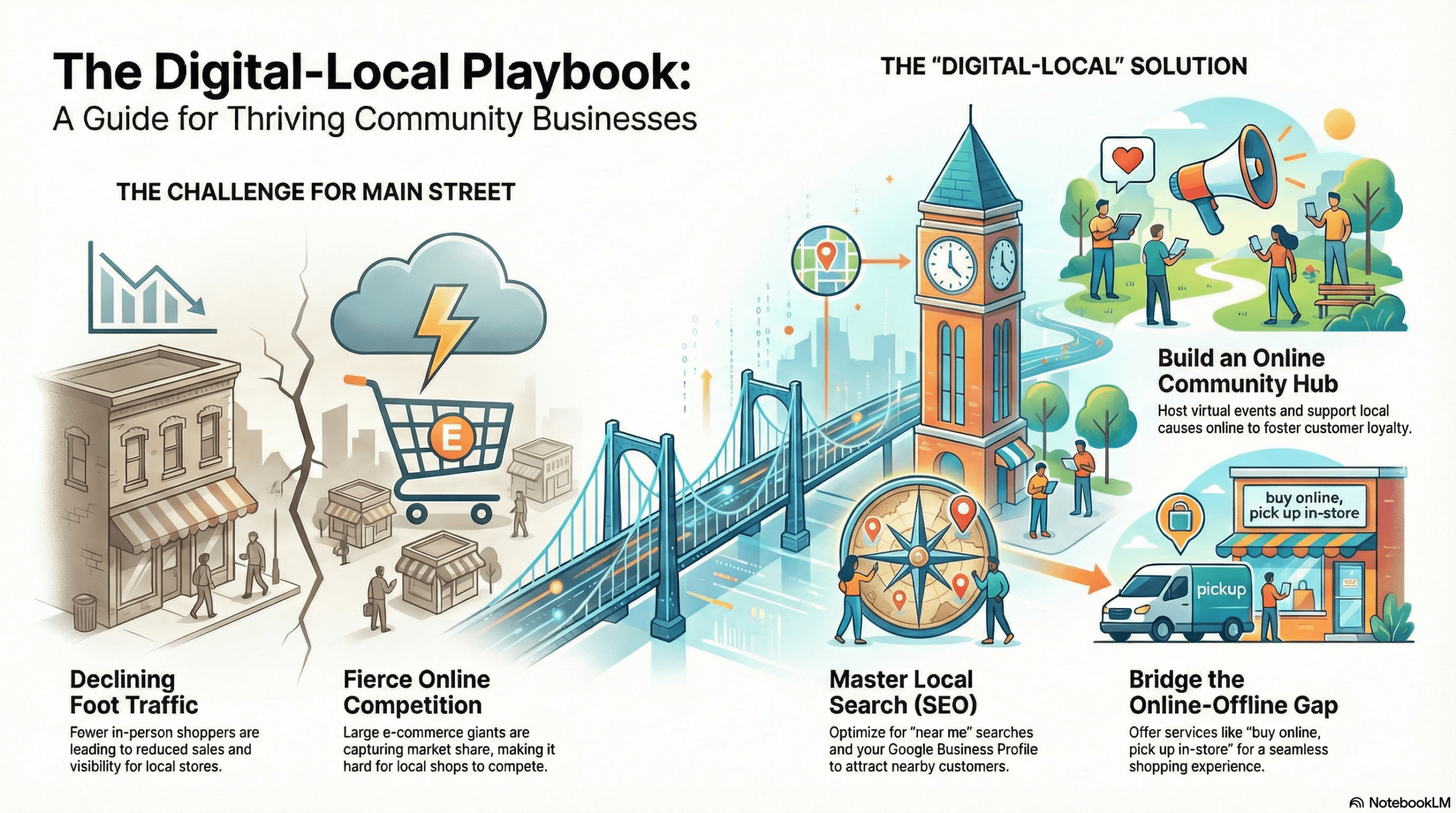
Brick-and-mortar stores face big hurdles, like fewer people walking in and more online rivals. Many small shops don’t have an online store, a chance to stand out by going online. By using e-commerce tips, local shops can boost online sales and stay in the game.
| Challenge | Impact | Potential Solution |
|---|---|---|
| Declining Foot Traffic | Reduced Sales | Online Presence |
| Online Competition | Market Share Loss | E-commerce Integration |
The Hybrid Model: Online Sales with Local Heart
The hybrid model is a win-win, keeping local charm while reaching more online. By linking online and offline, shops offer a smooth shopping journey for all. For example, boosting local SEO can make shops pop up in “near me” searches, boosting both foot traffic and online sales.
Understanding Local E-commerce Strategies
Local businesses need a ‘digital-local’ approach to succeed. This method uses online tools to build stronger community ties. It combines digital and local experiences, improving both online and in-store interactions.
Defining the “Digital-Local” Approach
The “digital-local” approach uses e-commerce to support local communities. It’s not just about selling online; it’s about making real connections with customers. Businesses that use this strategy can help the environment, promote inclusivity, and increase sales.
By linking online and offline channels, businesses can offer a unified brand experience. This experience speaks to local customers, making them feel valued.
How Online Tools Can Strengthen Community Connections
Online tools can greatly improve community ties by encouraging local engagement. For example, e-commerce platforms can promote local events and offer products specific to the area. They can also provide services that meet local needs.
Using effective local SEO for e-commerce can make businesses more visible in local searches. This leads to more people visiting their stores. Local marketing tactics for e-commerce, like targeted social media, help businesses connect with their community on a personal level.

Creating Your Digital Storefront with Community Focus
Building a digital storefront that connects with your local community is key to success. As a local business owner, your online space should mirror your community’s values and identity.
To make this happen, focus on a few important steps. First, pick the right e-commerce platform that fits your business needs. Sites like BigCommerce have tools for SEO and design customization to boost your online presence.
Selecting the Right E-commerce Platform for Local Businesses
When picking a platform, look at ease of use, growth capabilities, and local payment options. BigCommerce, for example, is easy to use and has features for business growth.
| E-commerce Platform Features | BigCommerce | Shopify | WooCommerce |
|---|---|---|---|
| SEO Optimization | Yes | Yes | Yes |
| Customizable Designs | Yes | Yes | Yes |
| Local Payment Integration | Yes | Yes | Yes |
Designing a Website That Reflects Your Local Identity
Your website should show off your local roots. Use local photos, talk about your community work, and keep your branding consistent online and offline.
Integrating In-Store and Online Experiences Seamlessly
Make your in-store and online experiences work together. Offer services like “buy online, pick up in-store” or in-store returns for online buys. This makes shopping easier and builds customer loyalty.
By focusing on these areas, you can build a digital storefront that boosts your local online presence and strengthens your community ties.
Local SEO Mastery for Neighborhood Visibility
Local SEO is key for neighborhood businesses to succeed online. It’s important to know that effective local SEO for e-commerce can greatly impact a business’s online presence.
To excel in local SEO, we must focus on a few key areas. First, let’s look at optimizing for “near me” searches and local intent.
Optimizing for “Near Me” Searches and Local Intent
Optimizing for “near me” searches is vital, as many customers search for local businesses online. Make sure your website includes location-specific keywords and is easy to use on mobile devices. For more tips, check out our local SEO guide.
Google Business Profile Optimization Techniques
A well-optimized Google Business Profile is key for local visibility. Ensure your profile is complete, up-to-date, and reflects your business accurately. This includes responding quickly to reviews and using high-quality images.
Creating Location-Specific Content That Converts
Creating content that speaks to your local audience is essential. Use location-specific keywords and topics that matter to your community to attract local customers. As “The key to successful local SEO is understanding and catering to the needs of your local audience.”

By mastering these local SEO strategies, we can greatly improve our neighborhood visibility and attract more local customers.
Community-Centered Digital Marketing Tactics
Effective local e-commerce strategies focus on community marketing. This approach builds engagement and loyalty. It uses hyperlocal social media, neighborhood emails, and partnerships with local businesses to boost presence.
Hyperlocal Social Media Engagement Strategies
Hyperlocal social media targets specific areas. Companies like 3 Rivers Outdoor Company host events to engage locals. We can do the same by creating content that interests our community.
Neighborhood-Focused Email Campaigns
Email marketing is key for local businesses. By sending neighborhood-focused emails, we can tailor our messages. This promotes local products and meets community needs.
Cross-Promotion with Fellow Local Businesses
Working with local businesses expands our reach. By teaming up, we can promote each other’s offerings. This boosts our visibility and trust in the community.
| Tactic | Description | Benefit |
|---|---|---|
| Hyperlocal Social Media | Targeted social media content | Increased local engagement |
| Neighborhood-Focused Email | Personalized email campaigns | Improved customer loyalty |
| Cross-Promotion | Partnerships with local businesses | Expanded customer base |
Transforming Your Online Store into a Community Hub
Local businesses are now focusing on turning their online stores into community hubs. This is key for growth and keeping customers engaged. It’s about making a digital space where people can shop and feel like they belong.

Hosting Virtual Community Events and Workshops
Hosting virtual events and workshops is a great way to build a community hub. For example, Mountain Chalet offers online cooking classes and wellness workshops. These activities create a shared experience that goes beyond just buying things.
Using tools like Zoom or Google Meet, you can hold interactive sessions. These sessions educate and entertain, making customers feel closer to your brand.
Creating Digital Spaces for Customer Interaction
Creating spaces for customers to interact is also important. You can use social media groups, forums, or live chat on your website. This helps build a loyal community around your brand.
For instance, a local bookstore could start a Facebook group for book lovers. Here, members can discuss their favorite books, creating a sense of friendship.
Supporting Local Causes Through Your E-commerce Platform
Supporting local causes shows your commitment to the community. You can partner with local charities or donate a part of your sales. Highlighting local products also helps.
This not only helps your community but also makes your brand more appealing. Customers who care about local support will appreciate it. For more tips on improving your local e-commerce, check out our Local SEO services page.
Measuring and Growing Your Local E-commerce Impact
To truly make a difference in our community, we must measure our local e-commerce impact. As we strive to boost local online sales and enhance local customer engagement, understanding our current standing is key.
Key Metrics for Tracking Community Engagement
Tracking community engagement is vital for the success of our local e-commerce efforts. Key metrics include:
- Website traffic from local sources
- Social media engagement rates
- Customer retention rates
- Local search rankings
By monitoring these metrics, we can gain insights into how effectively we’re connecting with our community. For instance, a high local search ranking can significantly boost local online sales. We can use tools like Google Analytics to track these metrics and adjust our strategies.
| Metric | Importance | Tool |
|---|---|---|
| Website Traffic | Indicates local interest | Google Analytics |
| Social Media Engagement | Shows community interaction | Social Media Insights |
Strategies for Scaling While Maintaining Local Authenticity
As we grow our local e-commerce presence, maintaining local authenticity is key. Strategies include:
- Partnering with local businesses
- Engaging in community events
- Personalizing customer experiences
By implementing these strategies, we can enhance local customer engagement while scaling our operations. For more insights on effective marketing strategies, visit our page on The Zen9 Marketing Approach to Inbound.
Conclusion: Becoming a Digital-Local Champion
By using Local E-commerce Strategies, businesses can shine in their communities. They can succeed both online and offline. We help turn your store into a place where people connect and feel loyal to your brand.
To succeed, it’s key to have a solid online presence. Use local SEO and connect with your community on social media. Also, run targeted marketing campaigns.
These steps boost your visibility, sales, and loyal customers. For more tips, check out Mise-en-place and Zen9 Marketing. They’re experts in digital-local success.
Keep working hard to be a champion in your community. Stay focused on your goals. And don’t be afraid to ask for help when you need it.